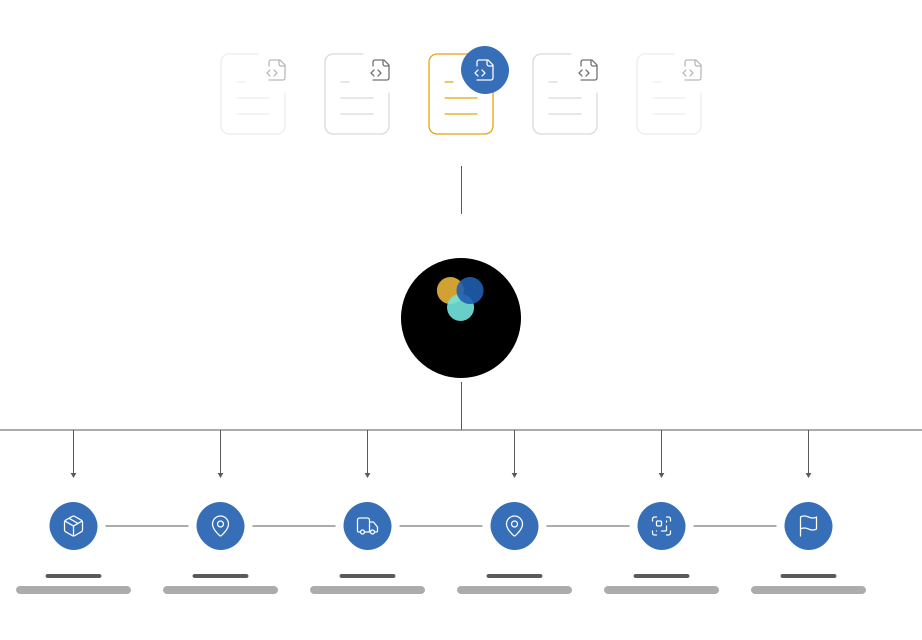
What is the eFTI Regulation?
eFTI stands for Electronic Freight Transport Information. It is EU Regulation 2020/1056, which creates a common digital framework for sharing freight transport documents across all transport modes in Europe.
Until now, authorities across the EU have required paper documents, CMRs, waybills, consignment notes, during roadside checks and inspections. From 9 July 2027, every EU Member State authority must legally accept digital equivalents submitted via a certified eFTI platform.
This is not optional. It is a binding obligation for authorities and a major opportunity for transport operators to finally go paperless.
Who does eFTI affect?
If your company moves goods across or within the EU, eFTI is relevant to you, regardless of size.

Carriers & Hauliers
Road transport operators exchanging CMR consignment notes must be able to present them digitally via a certified platform during inspections.

Freight Forwarders
Forwarders managing multi-modal shipments need to ensure their documentation chain is eFTI-compatible end to end.

Shippers & Manufacturers
Any business that ships goods and generates transport documents, whether directly or through partners is in scope of the regulation.

Authorities & Regulators
From July 2027, transport control authorities across all 27 EU Member States are legally obligated to accept digital documents.
Carriers & Hauliers
Road transport operators exchanging CMR consignment notes must be able to present them digitally via a certified platform during inspections.
Freight Forwarders
Forwarders managing multi-modal shipments need to ensure their documentation chain is eFTI-compatible end to end.
Shippers & Manufacturers
Any business that ships goods and generates transport documents, whether directly or through partners is in scope of the regulation.
Authorities & Regulators
From July 2027, transport control authorities across all 27 EU Member States are legally obligated to accept digital documents.
What do operators need to do?
The regulation does not force you to go digital, but it creates strong incentives. Here is what compliance looks like in practice.
Use a certified eFTI platform
Only platforms that have passed conformity assessment certification qualify under eFTI. Make sure any solution you use carries official certification.
Generate machine-readable documents
Transport documents must be available in machine-readable formats. QR codes are a key mechanism, drivers will show these to inspectors instead of paper.
Secure data storage & access control
Data must be stored securely and shared with authorities only on inspection request, using unique access links. End-to-end encryption is a platform requirement.
Integrate with your TMS or ERP
For operational efficiency, your transport management system should generate compliant eFTI documents automatically for every shipment across all transport modes.
Cover all relevant data sets
eFTI defines specific data sets per transport mode (road, rail, air, inland waterway). Your platform must support the data requirements of each mode you operate in.
Train your team
Drivers, dispatchers, and logistics managers need to know how digital documents work. Technology change is only successful when people are on board.
eFTI-ready from day one
Ybil's digiCMR and TMS were built with eFTI compliance at their core. Hundreds of logistics companies across the Baltics and beyond already run paperless with Ybil.

Common questions about eFTI
The regulation obliges authorities to accept electronic documents, it does not legally force operators to go digital. However, as paper-based systems become obsolete and authorities shift to digital-first workflows, any business still relying on paper after 2027 will face increasing friction and competitive disadvantage.